

How to Measure Blood Pressure Correctly at Home: Common Mistakes to Avoid
Monitoring your blood pressure at home isn’t just a good habit—it can be a life-saving one. With hypertension becoming increasingly common, especially in urban lifestyles, having a reliable home monitoring routine helps you stay ahead of potential risks.
But here’s the catch: most people measure their blood pressure incorrectly. Even small mistakes can lead to misleading readings, unnecessary anxiety, or worse—ignoring a real problem.
Let’s break down how to measure blood pressure correctly at home—and the common mistakes you should absolutely avoid.
Why Home Blood Pressure Monitoring Matters
Home monitoring gives a more realistic picture of your health compared to occasional clinic visits. It helps:
- Track daily fluctuations
- Detect early signs of hypertension
- Monitor effectiveness of medications
- Reduce “white coat syndrome” (high BP due to doctor visits)
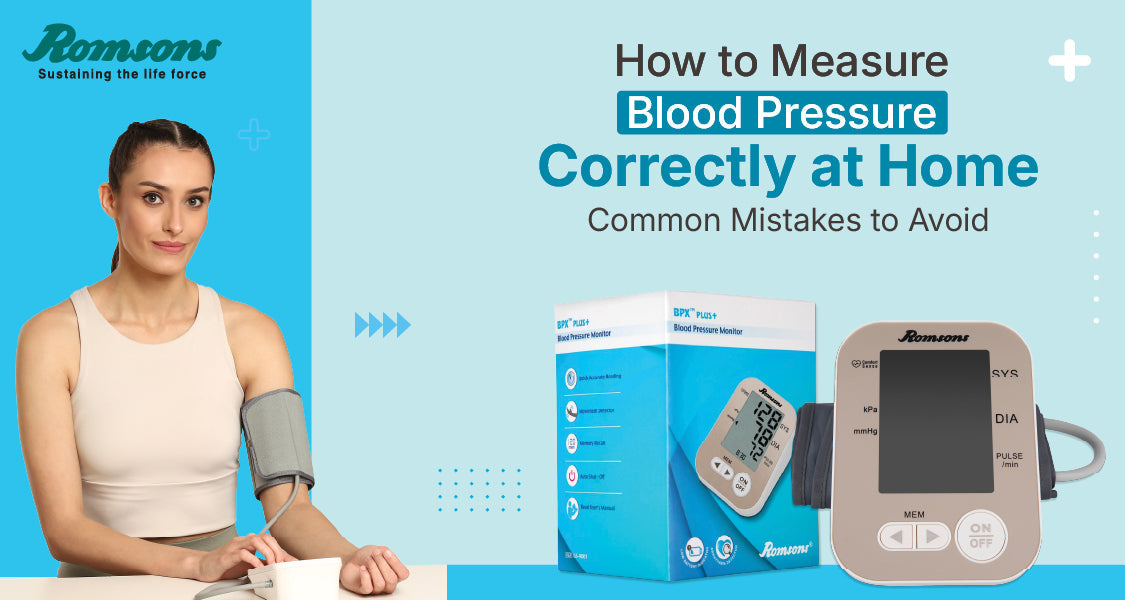
Using a reliable device like the Romsons BPX Fully Automatic Digital Blood Pressure Monitor makes the process simple, quick, and consistent.
Step-by-Step: How to Measure Blood Pressure Correctly
1. Choose the Right Device
A digital monitor is ideal for home use because it’s easy to operate and provides accurate readings.
Romsons BPX Digital Blood Pressure Monitor stands out as one of the most convenient options for home users. It features:
- Automatic inflation and deflation of the cuff
- Clear LCD display for easy reading
- Systolic, diastolic, and pulse rate measurement
- Memory storage of up to 120 readings
- Auto shut-off after one minute
- Safety design to prevent electrical shocks
This kind of user-friendly design reduces errors significantly.
2. Prepare Yourself Before Measuring
Before taking a reading, make sure:
- You haven’t consumed caffeine or smoked for at least 30 minutes
- You’ve emptied your bladder
- You’re seated comfortably for 5 minutes
Your body needs to be relaxed for an accurate reading.
3. Sit in the Correct Position
Posture matters more than you think.
- Sit upright with back supported
- Keep your feet flat on the floor (don’t cross legs)
- Rest your arm on a table at heart level
Improper positioning can increase readings by 5–10 mmHg.
4. Place the Cuff Properly
The cuff should be:
- Wrapped snugly around your upper arm
- Positioned about 1 inch above the elbow
- Aligned with your heart level
Devices like the Romsons BPX simplify this with automatic cuff inflation, ensuring consistent pressure application.
5. Stay Still and Silent
While measuring:
- Don’t talk
- Don’t move
- Don’t check your phone
Even minor movement can affect the accuracy of your results.
6. Take Multiple Readings
For best results:
- Take 2–3 readings, 1–2 minutes apart
- Record all readings
- Use the average
With the memory recall feature (up to 120 readings) in the Romsons BPX monitor, tracking trends becomes effortless.
Understanding Your Readings
A standard blood pressure reading includes:
- Systolic Pressure (Top Number): Pressure when the heart beats
- Diastolic Pressure (Bottom Number): Pressure when the heart rests
Normal Range:
- Systolic: Less than 120 mmHg
- Diastolic: Less than 80 mmHg
Anything consistently above this may require medical attention.
Common Mistakes to Avoid
Even if you follow the steps, these common mistakes can throw off your readings:
1. Measuring Immediately After Activity
Checking BP after walking, climbing stairs, or stress can give falsely high readings.
👉 Always rest for at least 5 minutes before measuring.
2. Using the Wrong Cuff Size
A cuff that’s too tight or too loose can distort readings.
- Too small → Higher readings
- Too large → Lower readings
Make sure your device fits properly—most modern monitors like Romsons BPX are designed for standard adult sizing.
3. Talking During Measurement
Talking can increase systolic pressure by up to 10–15 mmHg.
👉 Stay completely silent.
4. Incorrect Arm Position
If your arm is below heart level → higher reading
If above heart level → lower reading
👉 Keep it aligned with your heart.
5. Measuring Over Clothes
Clothing creates a barrier and affects cuff pressure.
👉 Always measure on bare skin.
6. Not Maintaining Consistency
Checking BP at random times daily makes comparison difficult.
👉 Measure at the same time each day, preferably morning and evening.
7. Ignoring Device Calibration
Even digital monitors need occasional checks for accuracy.
👉 Use a trusted device like the Romsons BPX, which is built for reliability and consistent readings.
Tips for Accurate Long-Term Monitoring
- Maintain a BP log (digital or manual)
- Avoid stress before measuring
- Keep your device in good condition
- Replace batteries regularly
- Share readings with your doctor
With features like auto shut-off and memory recall, the Romsons BPX monitor makes long-term tracking simple and efficient.
When Should You Be Concerned?
Seek medical advice if:
- Your readings are consistently above 130/80 mmHg
- You experience symptoms like headaches, dizziness, or chest pain
- Your BP fluctuates drastically
Home monitoring is helpful—but it doesn’t replace professional diagnosis.
Measuring blood pressure at home is one of the easiest ways to stay proactive about your heart health—but only if done correctly.
From posture to timing, every small detail matters. Investing in a reliable device like the Romsons BPX Fully Automatic Digital Blood Pressure Monitor ensures not just convenience, but also accuracy and peace of mind.
Because when it comes to your health, guesswork isn’t an option—precision is.